HOW ARE
SEDIMENTARY
ROCKS FORMED
SEDIMENTOGENESIS
weathering:
alteration of the physical, chemical and mineralogical properties of
rocks in response to environmental conditions impacting the surface

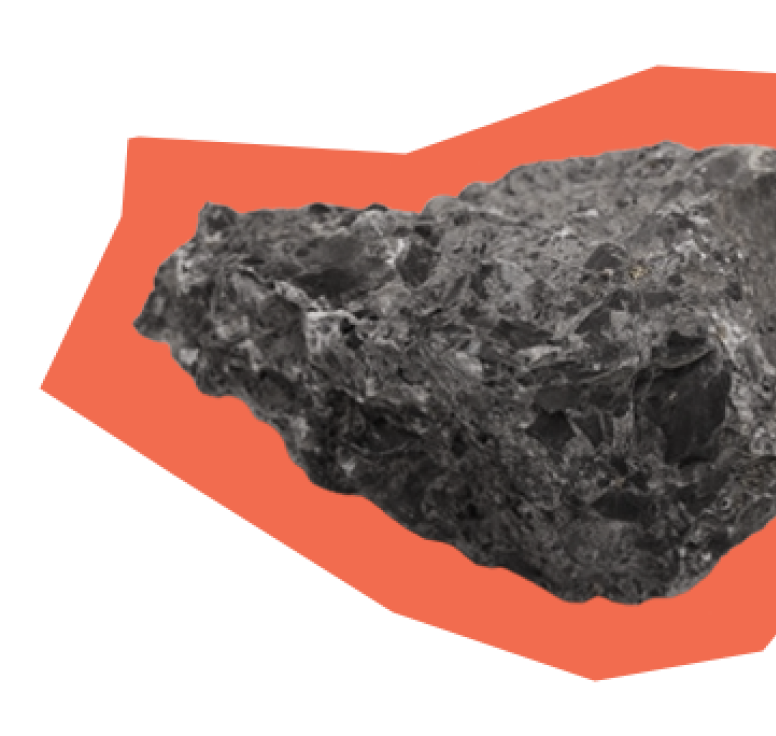
CHEMICAL
The instability of the structure of minerals, formed at
depth, when they are in surface conditions causes the
removal or introduction of chemical elements into their
chemical structure so that a conversion occurs into
minerals that are more stable in surface conditions or
soluble products.

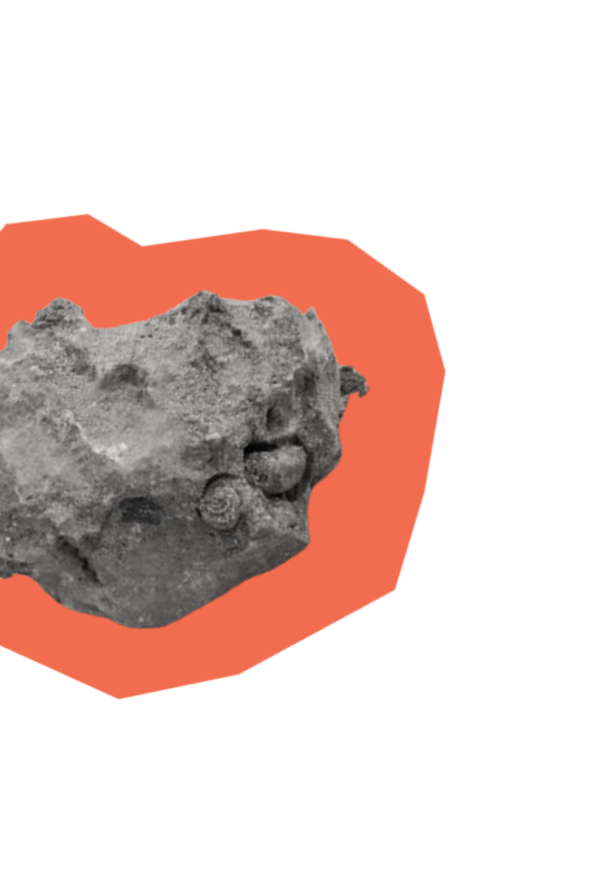
PHYSICAL/MECHANICAL
The chemical composition is not changed, the
rock is broken into small fragments.
halocastly:
The water present in rock fractures
contains dissolved salts that can
precipitate and when they begin to
grow, they exert an expansive force
that contributes to the disintegration
of the rock.
cryoclasm:
Water that penetrates the interstices
and pores of the rock freezes,
exerting pressure that causes the
fissures to widen, which can lead to
the disintegration of the rock, creating
blocks of various sizes.
exfoliation:
Pressure relief.
Rocks formed at depth.
mechanical action of
water and wind
1/2

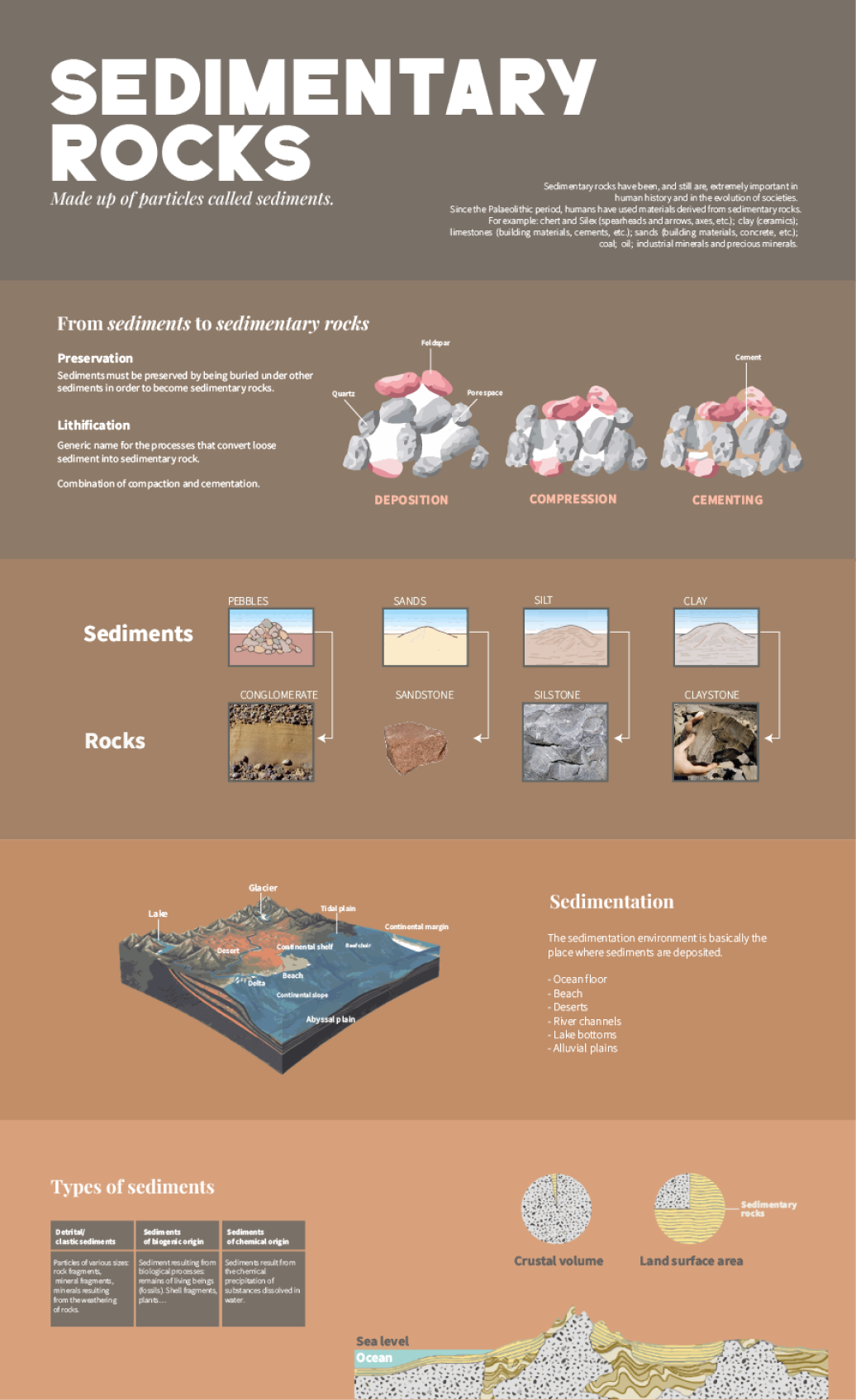
SEDIMENTATION SITES
Lake Bottoms
River Channels
Beaches
Ocean Bottom
Deserts
erosion:
Removal of materials resulting from
the weathering of rocks, by agents
such as water, wind or even ice.
transport:
The materials resulting from
weathering are transported by various
agents, mainly by water and wind to
other locations. During this process,
they undergo changes such as
rounding (loss of edges and vertices,
making the rocks smoother),
granoscreening (calibration of the
rocks) and brightness.
sedimentation:
This occurs when the transport agent
loses energy and the transported
materials become deposited.
Deposition generally occurs in
overlapping layers (strata) in a
horizontal and parallel manner.
DIAGENESIS / LITHIFICATION
compression:
Compression of sediments by the
upper layers that were deposited on
them. consequently, water is expelled
(dehydration), and, therefore, a
decrease in volume, making the rock
denser and more compact.
cementation:
Filling the spaces between
sediments with new minerals
that result from the precipitation
of substances dissolved in
water, forming a cement that
binds all the particles together,
creating a cohesive and
consolidated rock.